- Dance-drama on Lord Gautam Buddha captivates the audience
- Play titled ‘Kanha se Dwarikadhish’ staged alongside Dastangoi
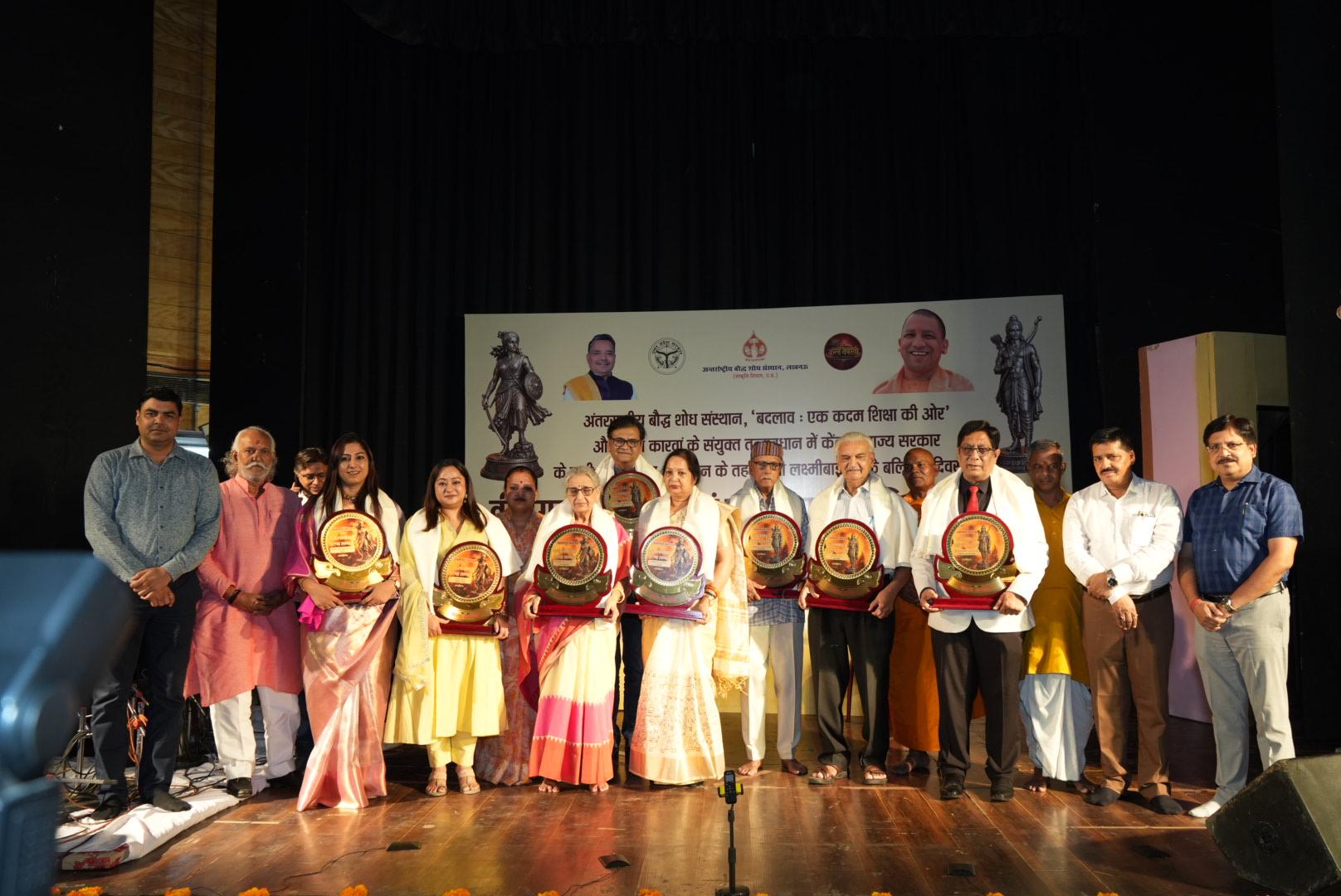
TIL Desk Lucknow: The ‘Virangana Sammelan’ (Heroines’ Conclave) and ‘Lakshmanpuri Festival-2026’ were organized on Thursday, June 18, 2026, starting at 4:00 PM. The event was held under the ‘Nari Shakti Vandan Abhiyan’ (Saluting Women’s Power) through the joint efforts of the International Buddhist Research Institute (Department of Culture), ‘Badlav: Ek Kadam Shiksha Ki Ore’, and ‘Kala Karavan’. Held at the auditorium of the International Buddhist Research Institute in Gomti Nagar on the martyrdom anniversary of Rani Lakshmibai, the cultural festival showcased Lucknow’s rich cultural heritage, art, literature, folk traditions, and social consciousness.
During the program, the ‘Lakshmanpuri Gaurav Samman’ (Lakshmanpuri Pride Award) was conferred upon senior theatre artist and actor Dr. Anil Rastogi, senior journalist Shyam Kumar, entrepreneur Yawar Ali Shah, and Rotary Club Assistant Governor Praveen Kumar Mittal. The ‘Rani Lakshmibai Prerna Samman’ (Rani Lakshmibai Inspiration Award) was presented to Padma Shri Vidya Bindu Singh, educationist Roma Bachani, teacher Dr. Anita Mishra, and actress Manisha Mehra. These honorees were presented with mementos and traditional stoles (angavastras) by distinguished guests, including Rati Shankar Tripathi (Chairman, Bharatendu Natya Akademi), Dr. Sunil Kumar Vishwakarma (State Lalit Kala Akademi), Vibha Singh (Vice-Chairperson, UP Sangeet Natak Akademi), Devendra Tripathi (Secretary, Lalit Kala Akademi), Bhante Sheel Ratan, Institute members Tarunesh Mishra and Director Dr. Rakesh Singh, and Amit Agnihotri (Director, Lalit Kala Akademi).
Following the awards ceremony, the dance-drama ‘Buddham Sharanam Gachchhami’ was staged. It presented the life of Gautam Buddha and his journey toward enlightenment through expressive dance. The narrative began with the opulent life of Prince Siddhartha of Kapilvastu. It then depicted his journey from the detachment (vairagya) that arose upon witnessing life’s sorrows, disease, old age, and death, through his quest for truth and deep meditation in Bodh Gaya, culminating in his attainment of enlightenment and transformation into the Buddha. Through this dance-drama, a message of the ‘Middle Path,’ non-violence, and compassion was conveyed to humanity. The performance was presented under the direction of renowned Kathak dancer and guru Dr. Upasana Dixit. Music composition and vocals were provided by Pandit Anand Dixit and Krishna Kumar Maurya. The voice-overs for the dialogues were delivered by Pandit Anand Dixit, Akhand Pratap, Mansi Giri, and Akanksha Srivastava. The dancers performing on stage included Charu Pandey, Akanksha Srivastava, Mansi Giri, Ananya Tiwari, Aarohi Pathak, Ananya Agarwal, Neha Srivastava, Sonal Mishra, Ananya Verma, and Shiksha Agarwal.
—
Taut as a bowstring, steadfast as a vow—such was every resolve of Lakshman. Lakshman—a name that epitomizes courage, vigilance, and unwavering devotion. This unique character from the Ramayana dedicated his entire life to a singular purpose: serving Shri Ram and upholding Dharma (righteousness). Fourteen years of exile, ceaseless vigil, and standing firm amidst every crisis—his life was a silent penance. His anger was rooted in righteousness, and his love was defined by sacrifice. Dastangos (storytellers) Arshana Azmat and Prateek Bhardwaj presented this essence through Lakshmangatha, a Dastangoi performance centered on Lakshman.
Arshana poignantly portrayed Urmila’s silent strength and her sacrifice through these verses:
Taut as a bowstring, steadfast as a vow—such was every resolve of Lakshman, Ever present like a shadow, sacrifice became his chosen path.
Urmila’s silent penance—a lamp burning through every pain,
In their shared vow of love, the path of Maryada (righteous conduct) was walked.
—
Next came the theatrical presentation titled ‘Kanha se Dwarikadhish’ (From Kanha to Dwarikadhish). This magnificent performance, featuring around 50 artists, left a lasting impression on every member of the audience. Staged under the direction of Amit Dixit Ram Ji, the play chronicles the extraordinary life journey of Lord Krishna, spanning from his childhood divine plays (Bal-Leela) to the fulfillment of his royal duties (Rajdharma). In the lanes of Gokul, the mischievous Kanha captivates hearts with his butter-stealing antics and Yashoda’s maternal affection. The love resonating in his flute binds all of Vrindavan together in a harmonious bond. His divine and protective nature is revealed through the subjugation of the serpent Kaliya and the lifting of Mount Govardhan. In the Raas-Lila, the love between Radha and Krishna symbolizes the eternal union of souls; yet, amidst this splendor, Radha’s separation conveys the message of love’s immortality. However, amidst this sweetness, the call of duty leads him onto the path of separation. A new chapter of life begins with his departure for Mathura. The slaying of Kansa heralds the triumph of righteousness over unrighteousness. Krishna emerges not merely as Kanha, but as a bearer of the Yuga-Dharma (the righteous duty of the era). Over time, he evolves into a skilled diplomat and a visionary ruler. The establishment of Dwarka stands as a testament to his leadership and statesmanship. As “Dwarkadhish,” he embodies the ideals of duty, righteousness, and governance.