
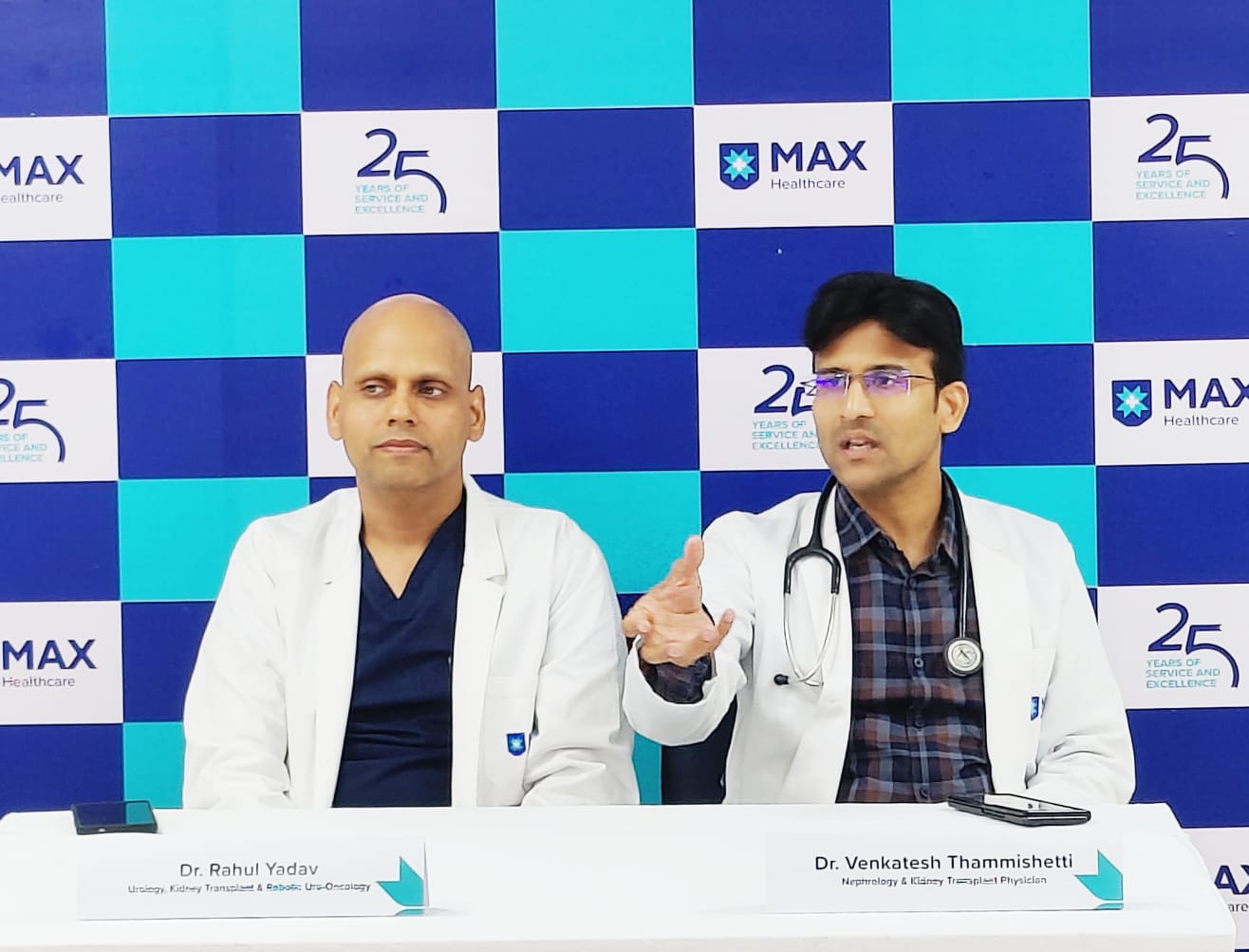
TIL Desk Lucknow: Doctors at Max Super Speciality Hospital, Lucknow, have successfully performed a complex living donor kidney transplant on a 41-year-old HIV-positive patient from Gonda, Uttar Pradesh, demonstrating the feasibility of advanced transplant care in clinically challenging cases.
Diagnosed with HIV in 2018, the patient experienced a gradual decline in kidney function over the years and progressed to end-stage renal disease, requiring regular dialysis from 2023. Despite being on regular antiretroviral therapy, he faced difficulty accessing transplant options, as multiple centres were hesitant to undertake the procedure due to its complexity.
In January 2026, he was referred to the transplant team at Max Super Speciality Hospital, Lucknow, where he was evaluated by Dr. Venkatesh Thammishetti, Associate Director – Nephrology and Renal Transplant Physician, and Dr. Rahul Yadav and Dr. Adittya Kumar Sharma, Directors – Urology, Andrology, Kidney Transplant and Robotic Uro-Oncology. Following detailed assessment, the team developed a carefully coordinated treatment plan, including optimisation of his ongoing HIV therapy to align with post-transplant requirements.
With his wife as the donor and compatibility confirmed, the transplant was successfully performed. The patient had a stable recovery, was discharged within a week, and is now off dialysis.
“Managing transplantation in patients with co-existing conditions such as HIV requires close coordination across specialties and careful clinical planning,” said Dr. Venkatesh Thammishetti, Associate Director – Nephrology and Renal Transplant Physician at Max Super Speciality Hospital, Lucknow. “With appropriate protocols and monitoring, such procedures can be performed safely with positive outcomes.”
The surgical team, led by Dr. Rahul Yadav and Dr. Adittya Kumar Sharma, noted that the patient is gradually returning to normal life while continuing on a carefully monitored regimen of immunosuppressive and antiretroviral therapy. Both donor and recipient are doing well.
The case highlights evolving clinical capabilities in managing complex transplant scenarios and expands access to treatment for patients with conditions traditionally considered high-risk.