TIL Desk Amethi: The Rajiv Gandhi Institute of Petroleum Technology (RGIPT) celebrated National Technology Day 2026 by showcasing several innovative and sustainable technologies developed by the institute. These technologies are designed for social benefit, environmental protection, renewable energy generation, and “waste-to-wealth” applications. Students, faculty members, media representatives, and school children from nearby institutions enthusiastically participated in the event.
Through multiple demonstrations, RGIPT highlighted how engineering and scientific innovations can provide practical solutions to challenges related to waste management, water conservation, carbon management, renewable energy, and sustainable development.
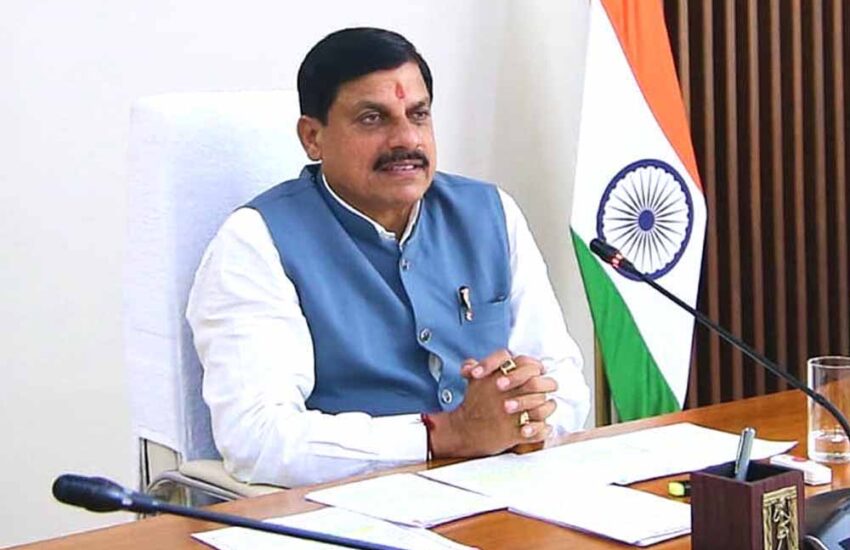
Addressing the media, the institute’s Director, Acharya Harish Hirani emphasized the importance of technology-driven sustainable development. He stated that the technologies displayed at the event are not merely conceptual ideas but working systems applicable in real-life conditions. He highlighted that the institute is developing reliable, scalable, and affordable technologies aimed at addressing critical environmental and energy challenges while ensuring operational safety, resource efficiency, and long-term sustainability.
He further remarked that modern technological advancement should focus not only on innovation but also on practical social impact, environmental responsibility, and the principles of a circular economy.
Prof. Hirani elaborated on the institute’s integrated water management and sewage treatment initiatives. He explained that RGIPT has developed systems for sewage water purification, recycling, groundwater recharge, and continuous water reuse to maintain water-level stability. He also discussed the “Living Lab” concept being implemented on campus, where real-life environmental and engineering challenges are transformed into practical educational and technological solutions.
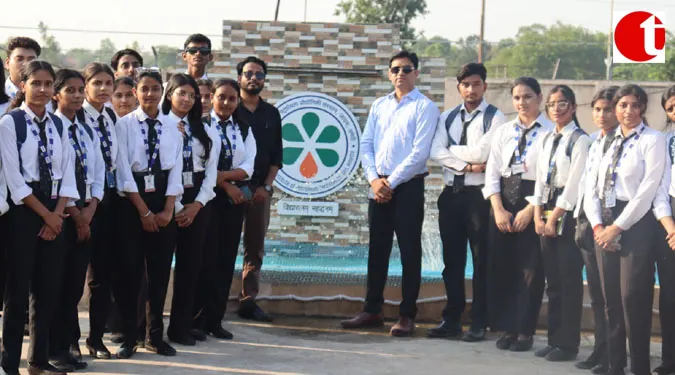
Treated sewage water is being effectively utilized within the campus for gardening, irrigation, fountains, and aesthetic applications such as selfie points, demonstrating sustainable wastewater reuse. He also stressed the importance of scientific treatment methods for controlling pathogens in sewage water and improving environmental hygiene.
Highlighting RGIPT’s progress in renewable energy and waste utilization technologies, Prof. Hirani stated that the institute has significantly increased its biogas production capacity and is supplying biogas equivalent to LPG for practical use. He mentioned that waste generated during the biogas process is also being converted into valuable products such as biochar for carbon dioxide capture and cleaning products, including soap, made from waste materials.
He emphasized that RGIPT’s objective is to transform waste into wealth and convert environmental challenges into sustainable opportunities. The Director also discussed ongoing work related to carbon dioxide purification, carbon utilization, hydrogen production through water splitting, and pilot-scale green hydrogen technologies. He noted that hydrogen holds immense future potential as a clean and pollution-free energy source capable of supporting India’s sustainable energy transition.
Prof. Hirani also highlighted the institute’s initiatives in solid waste management and plastic waste utilization. He explained that RGIPT is developing technologies related to waste segregation, plastic separation, waste shredding, and plastic-to-crude-oil conversion. Additionally, waste plastic is being transformed into useful products such as blocks, stools, and lever blocks, showcasing multiple value-added applications of recycled plastic materials.
He further discussed research activities focused on corrosion prevention and advanced protective coatings, including the development of specialized primers designed to reduce leakage and deterioration in industrial systems.
Emphasizing the role of advanced education and research in national development, Prof. Hirani announced that RGIPT is launching new M.Sc. programs in Sustainable Energy Sciences and Geosciences. These programs are designed to strengthen interdisciplinary education in renewable energy systems, hydrogen technology, sustainability, petroleum systems, subsurface sciences, and advanced energy technologies. The programs aim to develop skilled human resources capable of addressing future challenges related to energy security and sustainability.
The Director also announced expanded opportunities for Ph.D. admissions at RGIPT. He informed that students can now apply for Ph.D. programs through institute-based entrance examinations in addition to traditional admission routes. Importantly, eligible students can pursue Ph.D. research even without GATE qualification. Selected candidates will receive full fellowship support according to the institute’s norms.
Prof. Hirani also spoke about the responsible use of emerging digital technologies. He stated that while tools such as ChatGPT can assist in learning and productivity, excessive dependence on such technologies should be avoided. He emphasized the continued importance of original thinking, experimentation, and practical problem-solving for genuine technological innovation and scientific progress.
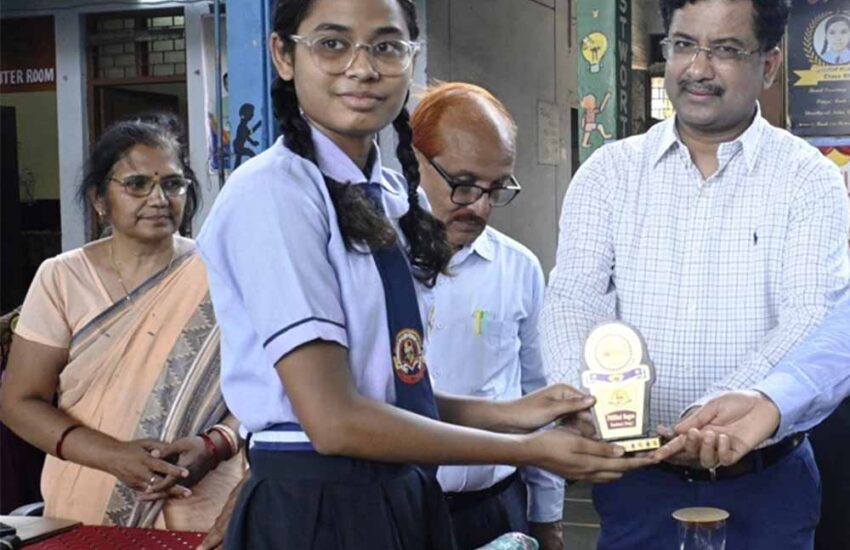
The event also featured interactive demonstrations for students from nearby schools and colleges. Through these exhibits, the institute demonstrated how science and engineering can effectively address challenges related to waste management, sustainable energy, water conservation, and resource recovery.
The celebration reflected RGIPT’s commitment to nation-building through innovation, sustainability, and socially relevant research.