- Advanced technology ensures safe and successful surgeries
- Patients return to normal life after successful procedures
TIL Desk Lucknow: Some patients came with the pain of old age, some with injuries from accidents, others had twisted their knees while playing sports, and for some, old injuries had become so severe that they were losing hope. Medanta Hospital has worked to bring happiness back into the lives of such patients.
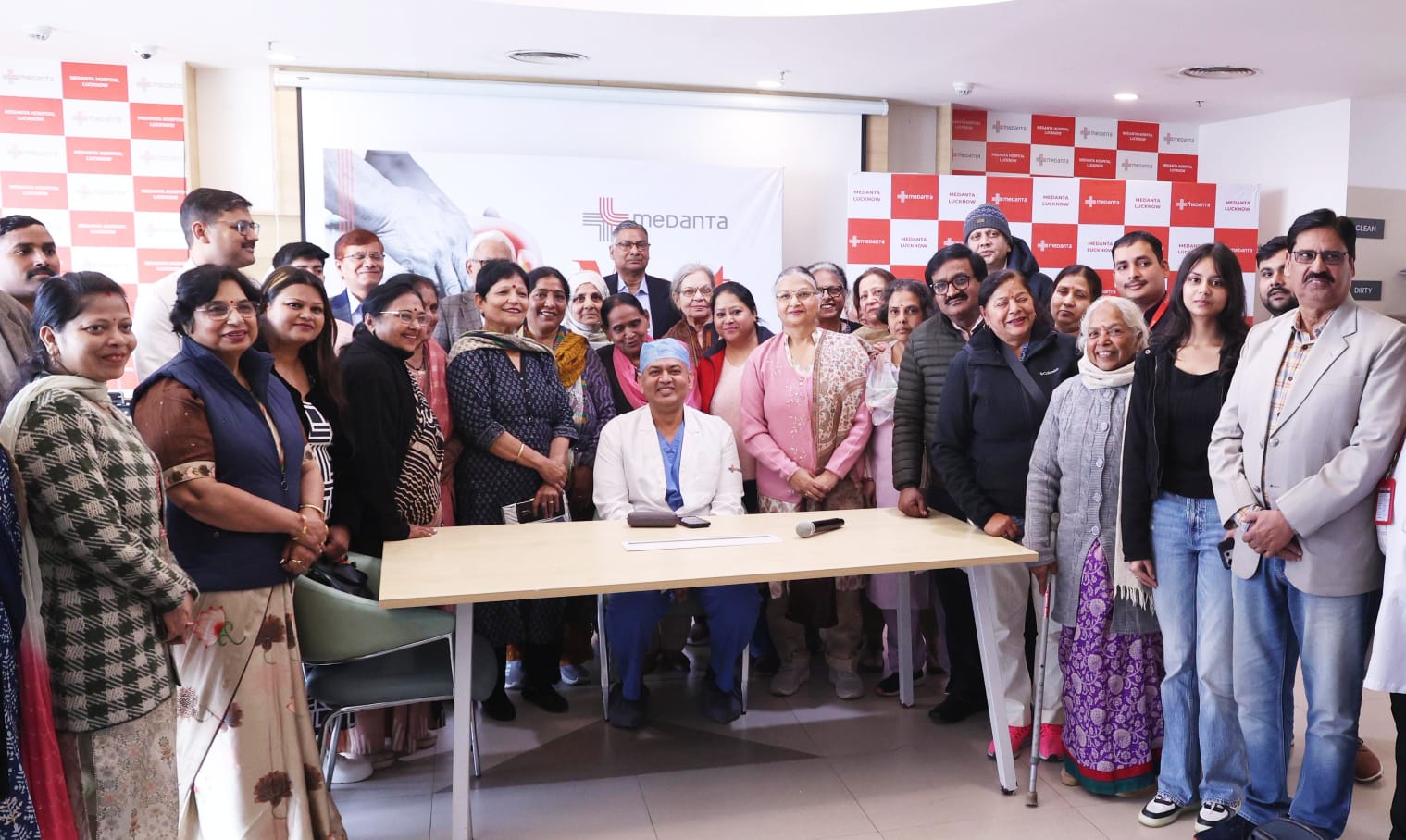
On Friday, during a press conference led by Dr. Sourav Shukla, Director – Orthopaedics and Robotic Knee Replacement Surgeon at Medanta Hospital, patients shared their experiences, leaving everyone amazed. The surgeries included procedures ranging from knee to hip and shoulder replacements. Patients who were once unable to walk normally are now performing daily activities such as morning walks, climbing stairs, and managing routine household tasks with ease.
When the cartilage in the knees begins to wear out, pain starts, cracking or grinding sounds develop, and walking becomes difficult. This problem usually begins after the age of 40 and worsens with increasing age. In the early stages, physiotherapy, medications, and lifestyle modifications can provide relief. However, when the joints deteriorate significantly, joint replacement becomes the most effective treatment. According to experts, knee replacement is considered one of the most successful orthopedic surgeries.
After surgery, patients are able to climb stairs, go to markets, perform household chores, and stand for long periods in the kitchen while cooking. With robotic knee replacement, knee alignment has become extremely precise, the incision is smaller, hospital stay is shorter, and most patients start walking on the very day of surgery. With proper care, a knee replacement can function comfortably for up to 20 years.
Dr. Sourav Shukla said, “After the age of 40, knee cartilage often starts wearing out, leading to pain, cracking sounds, and difficulty in walking. In the initial stages, medications, physiotherapy, and lifestyle changes can help, but as age increases and joints become severely damaged, joint replacement becomes the right option. This problem is seen more commonly in women. Earlier, people believed that knee replacement could not replicate the feel of a natural knee, but this is no longer true. Robotic technology has made knee replacement extremely precise, enabling patients to walk sooner with less pain and return to their normal daily lives.”
Rajesh Kumar (71 years), who underwent total knee replacement in both knees, was previously unable to walk due to severe pain and is now living a normal life. Dr. Anju Puri (67 years), a scientist, is fully active after a left knee replacement. Renowned high school teacher Rajendra Kumar Srivastava (77 years) also underwent total knee replacement in both knees and is now walking independently without support.
Ali Nawaz Khan (26 years) had suffered implant failure and infection after initial trauma treatment elsewhere. After treating the infection, he underwent total hip replacement and is now completely healthy.
Mithilesh Kumari (69 years), who had earlier undergone bilateral knee replacement, later received reverse shoulder arthroplasty on her right shoulder with excellent results.
Abhishek Singh Tomar successfully recovered after ACL reconstruction and multi-trauma surgery. Similarly, Nishchay Kumar, who had suffered a very serious accident, is now leading a normal life following successful treatment.
Thanks to modern robotic technology and a highly experienced medical team, the outcomes of joint replacement surgeries are continuously improving. With timely diagnosis, correct guidance, and advanced techniques, patients suffering from complex knee, hip, and shoulder problems are now able to live pain-free, active, and independent lives.